25/07/2026
On World Drowning Prevention Day (25 July), the National Water Safety Forum (NWSF) annouced a new future for drowning prevention in the UK.
The new UK Drowning Prevention Strategy is backed by more than 130 organisations across the UK, including national charities, search and rescue organisations, water safety practitioners, academic experts, educators, and families who have experienced personal loss to drowning.
As recent weeks have tragically revealed, accidental drowning is a major public health issue in the UK. In one week, from May 24th to the 31st, 19 people lost their lives in accidental water-related fatalities, many of them children and teenagers. According to the Water Incident Database (WAID), more than a quarter (26 per cent) of all accidental drowning deaths that occurred in the five-year period 2020 to 2024 were young people aged 10 to 29.
The new strategy – in conjunction with new targeted drowning prevention strategies for England, Scotland Wales and Northern Ireland, which are also being launched on 25 July – aims to build a future in which everyone in the UK can be safe while in, on or around the water. Across the four nations, targets include strengthening water safety education, increasing public awareness of the risks of water though water safety campaigns, and responding to new risks presented by climate change and extreme, including heatwaves.
Professor Mike Tipton, Chair of the NWSF and leading global voice in water safety said: “Each year in the UK we lose over 8,000 years of life to drowning. The new UK Drowning Prevention Strategy and four national strategies for England, Scotland, Wales and Northern Ireland are based on critical and detailed data surrounding drowning deaths. As a result, the strategies will focus and drive the National Water Safety Forum’s drowning prevention research, interventions, educational output and campaigns going forward, with the aim of minimising the devastation and loss of potential caused by drowning, helping to build a future where everyone in the UK can be safe in, on and around the water.”
To mark World Drowning Prevention Day and the launch of the new strategies, water safety organisations and leisure providers across the UK will be hosting events and activities that teach people the lifesaving skill of floating from 20 to 25 July. The “Find Your Float” campaign encourages people to learn and practice how to float in a safe and supervised environment like a swimming pool or lifeguarded beach. The campaign’s message is that, because everybody floats differently, it’s important to practice what floating looks and feels like for you – it could save your life in an emergency.
Flagship water safety events are being held in each of the four nations on the following dates. Each of these events will provide opportunities for people to get in the water and learn lifesaving skills, to take part in water-based activity sessions, and to watch rescue demonstrations.
- England – 23 July, Canary Wharf Sea Lanes Pool, London
- Scotland – 25 July, Loch Lomond Shores in Balloch
- Wales – 24 July, Cardiff International White Water Centre
- Northern Ireland – 24 July, Moira Lakes Paddle Sports and Events Centre (near Belfast)
Sadly, we know that warm weather is a known factor is a factor in increasing accidental drowning deaths. When the weather turns hot, many teenagers and young adults head to the water to socialise and cool off, often unaware of the dangers open water presents. With more hot weather and heatwaves forecast for the UK during August, water safety experts are urging the public to learn this essential lifesaving skill, and to share the message with friends and family.
How to find your float
- Tilt your head back with your ears submerged
- Relax and try to breathe normally
- Move your hands and legs to help you stay afloat
- It’s OK if your legs sink, everybody floats differently
- Once your breathing is under control, call for help or swim to safety.
For more information about the new UK Drowning Prevention Strategy and the Find Your Float campaign, visit nationalwatersafety.org.uk/strategy.
Read More >
18/06/2026
On Tuesday 16 June, 2026, Water Safety England launched a new framework for water safety education in England, designed to support all school-aged children and their families to build lifesaving skills and an understanding of the risks of water.
The National Water Safety and Swimming Competency Framework – launched at Parliament at the All-Party Parliamentary Group for Water Safety Education – provides a strategic overview of the essential water safety skills, knowledge and key benchmarks that every child should know at each stage of their education. A supporting National Water Safety Education Pathway provides practical examples of how water safety education can be implemented in the classroom, including suggested activities, resources and lesson plans for pupils aged three to 18.
The resources will come into effect in schools from September 2026, when water safety education will be integrated into the Department for Education’s Relationships and Sex Education (RSE) statutory guidance for schools in England. The new guidance requires primary school children be taught how to recognise risk and keep safe around water, including the Water Safety Code. Secondary school pupils will learn how to identify risk and manage personal safety in increasingly independent situations, how to recognise and manage peer influence, and the basics of first air, including lifesaving skills and how to administer CPR.
The National Water Safety and Swim Competency Framework has been developed by Water Safety England in partnership with water safety organisations, charities, educators and campaigners, including the Royal National Lifeboat Institution (RNLI), Royal Life Saving Society UK (RLSS UK), Royal Society for the Prevention of Accidents, Maritime and Coastguard Agency, Swim England, Canal & River Trust, Swimming Teachers Association, Greater Manchester Water Safety Strategic Partnership, Yorkshire Water and Durham County Council.
It has been developed with particular thanks to the families and friends with lived experiences of drowning who have campaigned tirelessly in memory of their loved ones for improvements to the accessibility of water safety education and swimming skills for all.
Darren Paffey, MP for Southampton Itchen and Chair of the APPG for Water Safety Education, said:
“As many as 33 children die every year from drowning. That’s equivalent to a classroom of children whose lives are tragically cut short in the water. We know that increasing awareness of how to stay safe in or near the water is absolutely crucial to saving lives. I really welcome this new framework which will help support the much-needed inclusion of water safety as a mandatory part of the national curriculum and help ensure that it is being taught effectively and consistently.”
School Standards Minister, Georgia Gould, said:
"Every year, heartbreaking and preventable accidents happen in and around water – and we must do everything we can to stop them. Water Safety England's new framework is an important step towards ensuring every young person can look after themselves in and around water, and I want to thank everyone who helped make this happen. Swimming and water safety are vital life skills, already compulsory in the primary PE curriculum, and from September they will be a statutory part of our Relationships, Sex, and Health Education guidance too – giving every school the tools to support their pupils’ safety in different types of water.”
Professor Mike Tipton, Chair of Water Safety England, said:
“The introduction of this initiative represents a major step forward for water safety that should feed through into wider society. It is a "lesson for life" that will equip young people with the necessary skills and knowledge to mitigate the hazards associated with immersion in cold water and its devastating consequences.”
Carlene McAvoy, Head of Policy at the Royal Society for the Prevention of Accidents, said:
“Consistent and comprehensive water safety education for children and young people is essential for reducing accidental drowning and water-related harm. Both the National Water Safety and Swimming Competency Framework and the supporting Water Safety Education Pathway will help embed essential lifesaving skills and water safety awareness into the curriculum in England – a significant and necessary step that will contribute to more people in England being safe while in, on or around the water.”
To view and download the National Water Safety and Swimming Competency Framework and supporting Education Pathway document, visit nationalwatersafety.org.uk/water-safety-england/water-safety-and-swimming-competency-framework.
Read More >
27/05/2026
Accidental drowning is often thought to be a predominantly coastal problem, however new data published today by the National Water Safety Forum (NWSF) reveals that the majority (57%) of accidental drowning deaths in 2025 occurred at inland locations such as rivers, lakes, reservoirs, canals, quarry lakes and lochs. This continues an established trend in UK drowning data, with inland locations consistently accounting for more than half of all accidental drowning deaths since 2019.
We know that periods of hot weather often correlate with a rise in accidental drownings, as increasing numbers of people visit both inland waterways and the coast to enjoy recreational activities or to cool off. The 2025 data support this trend, with August accounting for the most accidental water-related fatalities (31 deaths), followed by June and July (each accounting for 27 deaths).
Many inland waters stay dangerously cold all year round in the UK, remaining at 16°C or below even in summer, the temperature at which water is considered hazardous for cold water shock. Cold water shock is the body’s involuntary response to sudden immersion in cold water. It causes gasping, panic and loss of swimming ability, all of which can tragically lead to drowning. It also causes a spike in heart rate and blood pressure, which can result in a heart attack, even if the person is fit and healthy.
With more periods of hot weather and heatwaves forecast for the coming summer months, the NWSF is reminding everyone to enjoy the water safely at both inland waters and the coast by being aware of the risks, and by knowing how to help themselves and others in an emergency.
Professor Mike Tipton, Chair of the NWSF and leading expert in water safety and cold shock, said:
“These data mean thousands of years of life were again tragically lost in 2025. We are urging people to respect the water and to take actions to keep themselves safe – stick to supervised locations with lifeguards present, think before entering the water and enter the water slowly to reduce the risk of cold shock. If you do find yourself in trouble in the water, float on your back until you feel calm and either wait for rescue or swim to safety if you can.”
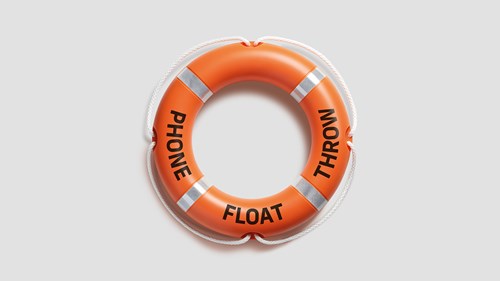
Phone Float Throw is a new public-facing water safety campaign from the NWSF and Respect The Water. It provides bystanders witnessing a someone struggling in the water with practical instructions for how to help, without putting themselves in danger:
- Phone 999 to get help
- Tell the person to stay calm and float on their back
- Throw rescue equipment to help them float until emergency services arrive
When we see someone in trouble in the water, or instinct can often be to jump in and attempt to rescue them, but entering the water yourself is dangerous and can put you at risk of drowning too. By remembering Phone Float Throw, bystanders can keep themselves out of danger and still provide lifesaving help to the person in the water.
Sadly, 202 people accidentally died in water-related fatalities in 2025. Additionally, there are a further 201 cases where the cause is still unknown, meaning the number of accidental fatalities is likely to increase as additional information becomes available from coroners.
The 2025 Water Incident Database (WAID), which is maintained by the NWSF, shows us that:
- August was the month with the highest number of accidental water-related fatalities in the UK
- Inland waterways, such as rivers, canals, lakes, reservoirs and quarries are the leading locations for accidental drowning, accounting for 57% of deaths
- Males continue to be over-represented with 85% of accidental fatalities
- Males aged 60 to 69 the most affected group, however 43% of all accidental water-related fatalities were below the age of 40.
- Recreational activities (such as adventure sports, angling, boating and sailing) accounted for 63% of accidental fatalities
- Everyday activities like walking and running accounted for 32% of accidental fatalities, meaning many of those who lost their lives were not intending to enter the water
- Of the 202 confirmed accidental fatalities, 150 were in England, 39 in Scotland, 12 in Wales, and 1 was in Northern Ireland.
To view and download the WAID 2025 report, visit the NWSF website. For more information about Phone Float Throw and other water safety campaigns, visit respectthewater.com.
Read More >
19/03/2026
Message from the Chair
We are in a period of unprecedented activity, with the National Water Safety Forum and four devolved nations all producing the next iterations of their drowning prevention strategies. These documents are critical for setting, prioritising and focussing the direction of our drowning prevention work going forward. They will determine what we do and when, enabling us to reduce the 8,000 years of life lost each year in the UK to accidental drowning.
We are also in the process of reviewing how the Water Incident Database (WAID) functions, as well as working on important projects to do with advocacy, local authorities, water safety partnerships and water safety signage. This work would not be possible without the unflinching support of NSWF members and the secretariat support of the RoSPA team. I thank them all for their amazing ongoing efforts.
Professor Mike Tipton
Chair of the National Water Safety Forum and Water Safety England
Phone Float Throw: new Respect The Water bystander rescue campaign
Over the past year, the National Water Safety Forum has partnered with Claremont Communications to carry out a review of our existing bystander rescue instructions (Call, Tell, Throw), analysing their effectiveness through data analysis, public focus groups and stakeholder workshops.
This process found that both the clarity and memorability of Call, Tell, Throw was limited, both among stakeholders and the public. “Phone Float Throw” emerged from the review as a clearer, more instinctive and more widely understood set of instructions that emphasised the same lifesaving behaviours:
Phone 999 to get help
Tell them to stay calm and float on their back
Throw rescue equipment to help them float until the emergency services arrive
Launching on April 8, 2026, the new Phone Float Thow campaign from Respect The Water aims to embed these instructions into public-facing water safety messaging, empowering the public to take positive action if they see someone in trouble in the water. Through simple, impactful imagery, the campaign uses the universally recognised symbol of a life ring to immediately associate Phone Float Throw with water-based rescue in the mind of the viewer.
A campaign toolkit – including static and animated social media assets, posters and a detail campaign guidance document – has been created to help NWSF members and partners to support the campaign. To download resources, visit the Respect The Water website.
Support the Phone Float Throw campaign
Deadline approaching to submit an abstract National Water Safety Conference 2026
The deadline to submit an abstract for the National Water Safety Forum 2026 is Tuesday, 31 March, 2026.
Submit your conference abstract
The conference will take place on 7 October, 2026, in Birmingham, and will provide a vital platform for water safety leaders, practitioners, educators and academics to share knowledge, and shape the future of drowning prevention in the UK.
We are inviting abstracts on the following topics:
- Evidence and data – research, analysis, and evaluation methods in water safety
- Education – innovative approaches to increasing knowledge, skills and experience in water safety, swimming and water competency
- Communication – campaigns, messaging, and public engagement strategies
- Policy – approaches to collaboration between government, landowner and other responsible parties as well as management of risks in and around water.
Before submitting your abstract, please take time to read the submission guidance.
World Drowning Prevention Day 2026: Support the UK Drowning Prevention Strategy launch and Find Your Float campaign
Established by the World Health Organization, World Drowning Prevention Day is a global advocacy event that runs every year on 25 July.
World Drowning Prevention Day 2026 marks a particularly significant one for the National Water Safety Forum as we will be launching the new UK Drowning Prevention Strategy, as well as four new national drowning prevention strategies for England, Scotland, Wales and Northern Ireland. We will be launching the UK and four national strategies via a coordinated media day on 24 July, 2026. Members and partners can support by amplifying the launch across their channels and networks. A toolkit to support this activity will be provided closer to the time.
We will also be asking members and partners to put the principles of the UK Drowning Prevention Strategy into action by supporting the Find Your Float campaign for a second year. The purpose of this campaign is to encourage as many people as possible to learn and/or practise the essential lifesaving skill of floating, better preparing them for a water-based emergency.
You can get involved with the Find Your Float campaign by:
- Hosting a Find Your Float event
- Building a float tutorial or demonstration into existing events or activities
- Creating a “how to float” video
- Sharing the campaign messages on your channels and with your networks
Activity should take place between 20 and 25 July, 2026. We have created a campaign toolkit of social media assets, posters and guidance documents to assist you in planning Find Your Float activity. Key campaign assets are available to download on the Respect The Water website and a full campaign toolkit will be made available shortly.
For more information on how to support both the UK Drowning Prevention Strategy launch and the Find Your Float campaign – including how to adapt the campaign to your particular organisation - please see the recording from our World Drowning Prevention Day webinar from earlier this month.
If you have any questions about the launch of the UK Drowning Prevention Strategy of Find Your Float campaign, or need support with how to get involved, please don’t hesitate to get in touch: info@nationalwatersafety.org.uk.
Campaigns
Reduce the Risk, Boost Your Skills
HM Coastguard, the RNLI and the Royal Yachting Association have launched their 2026 water safety campaign aimed at recreational boaters.
This multi-channel campaign encourages both new and experienced boaters to “reduce the risk, boost your skills” by preparing themselves, their crew and their vessel before the start of the season. It aims to promote key safety behaviours, reduce the number of boating incidents, and prevent non-serious incidents from escalating.
Handy tips and guidance are included in the campaign’s safety checklists, which are provided free of charge across the UK, including a version available in Welsh. The laminated booklet includes simple advice, such as discussing passage plans and man overboard procedures, checking equipment and engine, identifying a second-in-command, and ensuring an effective means of calling for help is kept onboard.
To order or download copies of the checklists, posters and other campaign resources the HM Coastguard website.
Support the campaign
Be Water Aware
The National Fire Chiefs Council’s Be Water Aware campaign will be returning this spring, running from 27 April to 3 May, 2026.
The week‑long initiative focuses on raising awareness of the dangers around open water and aims to help prevent accidental drownings by sharing practical safety advice with communities. As the warmer months approach, NFCC encourages everyone to enjoy time in, on, and around water responsibly, highlighting key messages such as understanding cold‑water shock, recognising everyday risks, and knowing what to do in an emergency.
The resources for 2026 will be available for fire and rescue services and partners at the end of March via the NFCC website
Support Be Water Aware
Save the date: RLSS UK’s Drowning Prevention Week to take place from 13 to 20 June
National Water Safety Forum members play an important role in sharing water safety messaging and being involved in campaign activities during Drowning Prevention Week.
This year, RLSS UK want even more people to get involved, whether that’s by promoting the campaign, hosting activities, or helping to shape new resources.
Planning has already begun for the 2026 campaign – if you have any ideas or thoughts for possible collaborations, please contact marketing@rlss.org.uk.
Updates from the devolved nations
Water Safety England
From national to local – a model for England’s Water Safety Partnerships
Water Safety England are currently exploring whether a more structured framework could help strengthen coordination across water safety activity in England.
One option under consideration is a model where information, guidance and support flow from Water Safety England at the national level, through regional groups, and then into local areas. This approach could offer a more manageable and consistent way of organising our collective work. However, the potential challenges are also recognised, particularly for regions where formal groups are not yet in place, which could create additional demands or capacity pressures.
Working through the Education, Technical and Engagement Group – alongside partners including RoSPA, RNLI, the LGA Coastal SIG, and the NFCC – we aim to gather feedback over the coming months and expect to share results and a short report post summer.
Local authority approaches to water safety in England
Following a snapshot survey in 2021, RoSPA and Water Safety England have successfully completed research providing the first full insights into the current management of water safety in England.
A sample of Local authorities were surveyed to understand how they plan for and deliver drowning prevention work, focusing on responsibility for water safety and existing water safety policies. The completed research shows that around half of respondents (49 per cent) have a designated person or department for water safety. However, only 27 per cent of local authorities currently have a water safety policy in place, similar to previous findings, though it is encouraging that a further 9 per cent are in the process of developing one.
The full report can be accessed on the RoSPA website.
Read the report
Water Safety Scotland
Examining water safety awareness and views in men over 50
Water Safety Scotland, through the Royal Society for the Prevention of Accidents (RoSPA), hosted an online focus group in February, 2026, for men over the age of 50 who reside in Scotland. This focus group was held to help understand the water safety messaging preferences of those within this demographic, as according to Drowning and Incident Review (DIR) data, they are a high frequency group for accidental drowning fatalities.
The participants were asked general questions regarding their experiences and interactions with water bodies across Scotland. The discussion then progressed into specifics regarding their thoughts and opinions on water safety communications and messaging. A report on this focus group will be released shortly, outlining the insights gained.
Water Safety Wales
Wales Drowning Prevention Strategy
Over recent months, the draft Wales Drowning Prevention Strategy has been shaped through consultation with Water Safety Wales members, the Families Group, and a range of expert stakeholders. We are very grateful to everyone who has contributed their time, expertise and constructive comments throughout this process. Your input has helped strengthen the document and ensure it reflects a broad range of perspectives from across Wales.
We are also pleased to confirm that the draft strategy has now completed its public consultation phase. The consultation invited individuals, organisations and communities across Wales to comment on the draft strategy and help shape the final version, and it closed on 11 March, 2026. Water Safety Wales would like to thank everyone who responded, and especially those who helped to promote the consultation more widely through their networks and social media channels. We were delighted to have received 93 responses, reflecting the strength of interest and support for drowning prevention across Wales.
The next stage will be to review the consultation feedback in full, consider any further amendments required, and prepare the final document for publication. Subject to completion of this final review process, the strategy is intended to be published on World Drowning Prevention Day on 25 July.
Partner updates
Swim England: “Future of Facilities” report to be published in March
The APPG for Swimming is publishing a report into the Future of Facilities on 25 March, 2026. The enquiry examines the current state of public swimming pool provisions across England, and the main challenges facing pool owners and operators in maintaining facilities. It also promotes the importance of facilities, identifying why pools are important for the community and what the potential implications are for losing access to swimming facilities.
The report will be launched at an online event hosted by Chair of the APPG for Swimming, Jonathan Brash MP. Colleagues are welcome to join online – please contact sian.sedgwick@swimming.org if you would like to attend.
Research updates
Behind the Canal & River Trust’s “Quack Quack, Take Two Steps Back”
An article has been published in the Design Journal about the making of the Canal & River Trust’s water safety picture book for two to six-year-olds.
The Canal & River Trust worked with Muddy Publishing on a humanity-centred approach to creating and producing the book, designing it with the intended audience, not just for the intended audience. The article looks at how a picture book is a good way to reach the dual audience of young children and caregivers with a safety message in a way that can be repeated and practised.
Read the article
The physiology of survival - breath-hold shallow-water diving
A new paper on the physiology and risks of breath-hold shallow water diving was published in Experimental Physiology in December 2025. The paper is co-authored by Andrew H. Baker (Centre for Cardiovascular Sciences, University of Edinburgh), Ashley Jones (Swim England), Adrian Mayhew (Surf Life Saving GB), Carlene McAvoy (RoSPA and the National Water Safety Forum), Ross Macleod (RNLI), Hugh Montgomery (Centre for Human Health and Performance, University College London), Craig Robertson (Swim England and Carnegie School of Sport, Leeds Beckett University), Jo Talbot (RLSS UK), Mike Tipton (Extreme Environments Laboratory, University of Portsmouth, and Chair of the National Water Safety Forum).
Read the paper
Read More >